The Family-Style Distinction: Assisted Residing In Small Elderly Care Homes
Business Name: BeeHive Homes of White Rock
Address: 110 Longview Dr, Los Alamos, NM 87544
Phone: (505) 591-7021
BeeHive Homes of White Rock
Beehive Homes of White Rock assisted living care is ideal for those who value their independence but require help with some of the activities of daily living. Residents enjoy 24-hour support, private bedrooms with baths, medication monitoring, home-cooked meals, housekeeping and laundry services, social activities and outings, and daily physical and mental exercise opportunities. Beehive Homes memory care services accommodates the growing number of seniors affected by memory loss and dementia. Beehive Homes offers respite (short-term) care for your loved one should the need arise. Whether help is needed after a surgery or illness, for vacation coverage, or just a break from the routine, respite care provides you peace of mind for any length of stay.
110 Longview Dr, Los Alamos, NM 87544
Business Hours
Families typically begin taking a look at assisted living when life at home has tipped from "manageable with a bit of assistance" to "someone could get harmed if we keep going like this." That shift is psychological, not simply logistical. You are not looking for an item, you are attempting to safeguard both safety and dignity.
Most people photo assisted living as a large structure with a lobby, an activity calendar published by the elevator, and long hallways of similar doors. Those neighborhoods can work well for lots of older grownups. Yet over the last 10 to twenty years, a quieter option has grown: small, family-style elderly care homes operating in residential areas, typically with 4 to 10 residents.
Having dealt with households putting loved ones in both designs, I have actually seen the very same concern shown up again and again: does a small, family-style setting truly make a distinction, or is it simply a marketing phrase?
The brief response is that it can make an extensive difference, however only when the home is well run and the match is right. The details matter. Let us go through those information with real-world texture rather than slogans.
What "family-style" really suggests in assisted living
"Family-style" gets utilized so typically in senior care marketing that it runs the risk of losing meaning. In a strong small home, it normally points to 3 qualities that change the daily experience for residents.
First, scale. Instead of 80 to 120 homeowners, you may have 6 or 8. That alone moves nearly everything: how meals work, how personnel interact, how rapidly somebody is noticed if they look unhealthy, and how versatile the regimen can be.
Second, environment. These homes are frequently regular homes that have actually been adapted for elderly care. Believe single story or with a stair lift, large doorways, grab bars, and an accessible restroom, however still a front patio and a yard. Residents stroll into a living-room, not a lobby.
Third, culture. The better small homes operate more like a huge extended family than a center. Personnel frequently prepare in the same kitchen area, share meals at the exact same table, and build long-term relationships with locals and households. I have actually seen caretakers who know exactly how Mr. Alvarez likes his coffee and which gospel tune will calm Ms. Johnson during sundowning, without examining a chart.
Of course, "family-style" can also be utilized to gloss over an absence of professional structure. When you tour any small elderly care home, you ought to feel both the warmth of family and the foundation of a real assisted living operation: clear care plans, medication management, and accountability.
A day in a small elderly care home
It is easier to understand the family-style difference if you picture an actual day.
Morning does not begin with a loud overhead statement at 7:00 a.m. Locals generally wake by themselves rhythms. One person might be helped up at 6:30 since he always liked an early start. Another may sleep up until 8:30. Care staff resolve your house, knocking gently on doors, helping with bathing, brushing teeth, and wearing familiar clothes from each resident's own closet.
Breakfast frequently smells like home. Bacon, oatmeal, or eggs cooking in the cooking area finish the rooms. Citizens wander toward the table or, if required, are wheeled there. No one is swiping meal cards or standing in buffet lines. Staff know who prefers a small portion and who will request for seconds.
Late early morning might involve easy activities: a puzzle at the kitchen area table, folding towels, tending plants, or sitting on the porch if the weather condition works together. In bigger assisted living neighborhoods, activities can feel more structured and sometimes theatrical, which some locals delight in. In small homes, engagement looks more like daily life. The caregiver might do a light workout routine with 2 people in the living-room, while another resident views the birds through the window and comments on each one.
Afternoons typically slow down, which is by design. Many older adults have limited stamina. After lunch, numerous homeowners nap in their own spaces. Staff utilize this time for peaceful care jobs: filling up supplies, finishing documentation, and getting ready for the assisted living white rock nm evening. If somebody wakes baffled or distressed, they are not roaming down a long corridor to discover assistance. They open their door and they are almost immediately visible to staff.
Dinner may be a shared meal with a visiting relative bring up a chair. In great homes, staff include locals in small, meaningful contributions: stirring a bowl, selecting which veggies to serve, or setting spoons on the table. Those are not just "activities" however ways to protect autonomy.
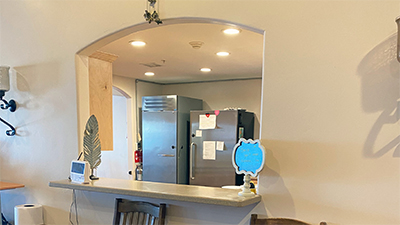
At night, the family-style distinction becomes particularly tangible. In larger neighborhoods, staffing often drops and caregivers cover an entire wing. In a small care home with, state, 6 locals, it is possible to have a couple of personnel on responsibility who can hear somebody call out. Nighttime restroom journeys are much shorter and more secure, due to the fact that the range from bed to bathroom is literally a couple of actions, and assistance is close.
Daily life in these homes can feel less like a scheduled program and more like life unfolding in a safe, carefully structured household.
Assisted living: small vs large communities
Families in some cases frame the choice as "intimate care vs more services," and there is some fact in that. The trade-off is not outright, however, and great small homes progressively offer robust services.
Here is an easy comparison that reflects what I have observed across many positionings:
- Environment: Small homes feel residential, with familiar furnishings and home-style kitchen areas. Larger assisted living communities feel more like a hotel or school, with public areas and clear separation in between "personnel" and "residents."
- Relationships: In a small home, residents and caretakers frequently understand each other deeply. Turnover still takes place, however continuity is more powerful. In large communities, locals might interact with much more people, which can be stimulating for some and overwhelming for others.
- Flexibility: Small homes can change routines rapidly. If a resident starts sleeping later, personnel just adapt. In larger settings, modification often moves slower since policies need to work for dozens of homeowners at once.
- Amenities: Large neighborhoods normally win on features: physical fitness rooms, beauty parlor, numerous activity areas. Small homes usually concentrate on core assisted living and elderly care services rather than extras.
- Clinical depth: Some big assisted living campuses have nurses on website 24/7 and treatment clinics within the structure. Small homes differ commonly. Some agreement with home health and hospice to bring services on website; others rely mostly on caretakers and off-site medical visits.
The right option depends less on abstract features and more on the specific person. A highly social 78-year-old who loves events might thrive in a larger senior care community. An 89-year-old with moderate dementia who gets anxious in crowds may settle beautifully into a quieter, small elderly care home.
Safety, staffing, and real-world risk
No family wants to find that "home-like" implies "informal" in the incorrect ways. Quality small homes combine warmth with rigorous attention to security, staffing, and care protocols.
Staffing ratios are a good beginning point, but they are not the entire story. In a small home, an apparently low ratio like one caregiver for each 3 or 4 homeowners can be powerful because exposure is so high. An employee seated at the cooking area table can see down the corridor and into the living location at once. There are less blind areas. If a resident starts to stand from a chair unsteadily, aid is just a couple of steps away.
In contrast, a big building could have a strong ratio on paper but still struggle with postponed response times if caregivers are spread out across long corridors or several floors. I remember one family who moved their father from a big assisted living structure to a 7-bed home after duplicated falls in his bathroom that nobody heard. In the smaller home, merely having the restroom 10 feet from the common area, with personnel near, cut his falls dramatically.
Medication management is typically tighter in well-run small homes because just a handful of citizens are on the schedule. The caretaker or med tech understands exactly who takes what at 8 a.m., 2 p.m., and bedtime. Errors can still take place, which is why you must always ask to see the medication administration procedure during a tour. However the intimacy can operate in favor of safety.
Of course, small size does not automatically equal safe. Warning include:
Caregivers seeming rushed since one person is covering too many homeowners, specifically throughout peak times like mornings.
Lack of clear documentation about care strategies, falls, or changes in condition.
No noticeable system for medication tracking, such as a MAR (medication administration record) or blister packs.
Strong small homes frequently work closely with going to nurses, physicians, home health, and hospice companies. They may arrange routine visits on website to handle persistent conditions, evaluation medications, and display skin stability or weight. This hybrid design, mixing assisted living support with external scientific services, can work well and keep residents steady longer.
The emotional reality: belonging vs institutional feel
On paper, families examine rates, care levels, and staff credentials. In practice, the psychological "fit" typically identifies whether a placement thrives.
Many older grownups who resisted conventional assisted living have accepted a relocate to a small elderly care home due to the fact that it feels like a home, not a facility. They can sit at the cooking area counter and chat while someone cooks. They can step into the yard and smell genuine yard. The visual cues state "home," not "institution," which alleviates the psychological blow of leaving one's own residence.
That said, not everybody wants a small, tight-knit environment. Some residents prefer the privacy of a larger senior care community, where they can join activities when they pick and pull away to their apartment or condo without sensation observed. In a small home, privacy should be safeguarded intentionally, due to the fact that the scale welcomes consistent interaction. Try to find homes that:
Respect closed doors as private area unless there is a safety concern.
Offer small nooks or quiet locations where a resident can read, listen to music, or view a program without consistent chatter.
Balance family-style meals with versatility, such as allowing a resident to eat in their space occasionally when they feel unwell or simply tired.
The emotional tone of the home often shows the leadership. If the owner or manager speaks respectfully of locals, focuses on their strengths, and coaches personnel to do the same, you normally feel that in the environment practically immediately.
Respite care in a small home: a trial run that matters
One of the surprise strengths of small assisted living homes is how well they can offer respite look after short stays. Family caregivers often hit a point where they require a week or 2 to recuperate, travel, or address their own health. A small home can use a momentary bed, with complete elderly care services, without the overwhelm of a large building.
Short-term respite stays serve two functions. First, they provide the main caretaker a real break, which can hold off irreversible placement and reduce burnout. Second, they work as a low-stakes trial for the older grownup. You can see how they get used to having aid with bathing, dressing, and medications, and how they respond to the social environment.
I recall a child who brought her mother, living with moderate dementia, into a small home for a 10-day respite while she underwent surgery herself. The mother was determined that this was "just for while my daughter needs to rest." Those 10 days sufficed for her to experience the sensation of not being alone at night, of having somebody nearby if she woke confused. Six months later on, when a relocation was clearly needed, she picked that same home without resistance and explained it as "the place where they understand how to make my tea."
When assessing respite care in a small home, ask whether the services and staffing are truly the same as for long-term locals. A well-run home must not downgrade care just because the stay is short. Respite should feel like a practical peek of life there.
Questions to ask when exploring a small elderly care home
Families typically inform me they feel overwhelmed by what to ask, especially if they are going to a number of alternatives. A focused set of concerns helps you look past the fresh paint and friendly smiles.
Here is a succinct list to bring with you:
- "Who owns this home, and how frequently are they on website?" Direct owner involvement can be a strength if it features accountability, not micromanagement.
- "What is your common staffing pattern, by time of day?" Listen for specifics: the number of caretakers at 7 a.m., 3 p.m., and overnight.
- "Tell me about the last time a resident's health changed rapidly. What took place and how did you respond?" Real stories reveal the real process.
- "How do you deal with medical consultations, emergencies, and hospital discharges?" You would like to know who coordinates, who carries, and how communication flows.
- "Can I speak with a current resident's family?" Referrals matter, especially in small homes where online reviews may be sparse.
Pay attention not only to the content of the responses, but likewise to how comfortable staff seem talking about less-than-perfect circumstances. A fully grown operation acknowledges that falls, hospitalizations, and behavioral challenges happen in senior care, and it explains its technique clearly.
Who prospers in a family-style home, and who might not
Not every older grownup is an ideal match for a small house design, and that is not a failure of the design. It is simply a matter of fit.
People who tend to do well include those with:
Mild to moderate dementia who are relaxed by regular, familiar environments, and a small circle of people.
Mobility difficulties that make browsing large structures hard, such as those using walkers or wheelchairs who tire quickly.
A long history of valuing home life over crowds and official events.
A strong requirement for peace of mind and close relationships with caregivers.
On the other hand, you may favor a larger assisted living neighborhood if your family member:
Is highly social and delights in a wide array of structured activities, from lectures to huge musical performances.
Is younger or more physically active and desires a gym, walking courses, or arranged getaways several times per week.
Needs access to on-site clinical services at all hours, such as a nurse who can handle intricate medical equipment or regular skilled interventions.
Another edge case involves behavioral symptoms. Some small homes are excellent with homeowners who wander, call out often, or have periodic agitation, because the setting is foreseeable and personnel understand them well. Others are not equipped to handle these scenarios safely. Ask directly what behaviors they can and can not manage, and what would activate a request for discharge.
How to read the subtle signs throughout a visit
Beyond formal concerns, a few of the most crucial details comes from what you observe, not what you are told.
Watch how personnel speak with residents. Do they lean down to eye level, usage names, and wait for actions? Or do they talk over locals as if they are not provide? One quiet however effective indication is whether staff acknowledge nonverbal cues, such as using a blanket when someone shivers or a rest when somebody looks fatigued however says they are "fine."
Look at the rhythm of your house. Is everyone lined up in front of a television, or are there small clusters of different activities? You do not need a constantly buzzing environment, but a total lack of engagement can be a warning.
Glance into bathrooms and around corners. Cleanliness in the less visible locations says more than the front space. Odors in elderly care settings can happen, specifically after a current mishap, however relentless smells of urine typically suggest inadequate cleaning or incontinence management.
Notice whether homeowners appear groomed in ways that match their history. A male who constantly used slacks now in stained sweatpants may indicate an inequality in between the home's design and his identity, or simply staffing that is cutting corners on individual care. For a lady who constantly loved her hair set, seeing her hair brushed and pinned back nicely can be an indication that the personnel pay attention to personal preferences.
Most of all, try to imagine your loved one waking up there, shuffling into the kitchen area, hearing familiar voices. Does the image feel manageable, even a little reassuring? Or does it make your stomach clench? Your own impulses, informed by cautious observation, are a helpful tool.
Cost, transparency, and what families often miss
Financially, small homes can be comparable in cost to traditional assisted living, however the structure of costs might differ. Some charge a flat rate that includes most care needs, while others utilize a tiered system that increases as care needs grow. Since these homes are typically independently owned, there can be more flexibility in tailoring a strategy, however likewise more variation in how costs are communicated.
Ask for a composed breakdown of what is included and what sets off surcharges. Support with bathing, dressing, toileting, and medications should be plainly defined. If your loved one currently requires hands-on help a number of times a day, press for specifics: the number of assists per day are consisted of, and what takes place if those needs double?
Families likewise underestimate the emotional expense of moving repeatedly. One advantage of some small homes is their ability to support locals all the method through end of life, in collaboration with hospice services. Others are less equipped for late-stage care and may need a relocate to an experienced nursing facility when requires increase.
Clarify:
Whether they have actually supported residents through end of life previously, and how that worked.
What types of medical devices they can accommodate, such as oxygen, medical facility beds, or feeding tubes.
Their policy on healthcare facility readmissions. Some homes can take residents back rapidly after a health center stay; others may think twice if requirements escalated.
The fewer disruptive relocations your loved one experiences, the better their stability, particularly when dementia is involved.
Choosing with clearness, not guilt
When households stand at this crossroads, regret typically shadows every choice: guilt about "putting Mom in a home," guilt about not having the ability to supply 24/7 care personally, or guilt about thinking about monetary limitations. That regret can distort judgment and make you vulnerable to polished marketing.
Small, family-style elderly care homes are not a wonderful answer. They can, however, offer a mild, human-scale option that respects both security and individuality, especially for those who find larger buildings confusing or impersonal.
The course forward is to combine your intimate understanding of your loved one with clear-eyed examination of each option. Visit more than once, at various times of day. Usage respite care if you can to test the waters. Ask difficult questions, and listen to how they are responded to. Notice how you feel ignoring the house.
Assisted living, at its finest, is not about warehousing older grownups. It is about constructing a small, sturdy community around them when the initial household structure can no longer bring the full load. In a well-run small elderly care home, that community can look a lot like family, with all the regular rhythms of shared meals, familiar voices, and the quiet self-confidence that someone is nearby if help is needed.
BeeHive Homes of White Rock provides assisted living care
BeeHive Homes of White Rock provides memory care services
BeeHive Homes of White Rock provides respite care services
BeeHive Homes of White Rock supports assistance with bathing and grooming
BeeHive Homes of White Rock offers private bedrooms with private bathrooms
BeeHive Homes of White Rock provides medication monitoring and documentation
BeeHive Homes of White Rock serves dietitian-approved meals
BeeHive Homes of White Rock provides housekeeping services
BeeHive Homes of White Rock provides laundry services
BeeHive Homes of White Rock offers community dining and social engagement activities
BeeHive Homes of White Rock features life enrichment activities
BeeHive Homes of White Rock supports personal care assistance during meals and daily routines
BeeHive Homes of White Rock promotes frequent physical and mental exercise opportunities
BeeHive Homes of White Rock provides a home-like residential environment
BeeHive Homes of White Rock creates customized care plans as residents’ needs change
BeeHive Homes of White Rock assesses individual resident care needs
BeeHive Homes of White Rock accepts private pay and long-term care insurance
BeeHive Homes of White Rock assists qualified veterans with Aid and Attendance benefits
BeeHive Homes of White Rock encourages meaningful resident-to-staff relationships
BeeHive Homes of White Rock delivers compassionate, attentive senior care focused on dignity and comfort
BeeHive Homes of White Rock has a phone number of (505) 591-7021
BeeHive Homes of White Rock has an address of 110 Longview Dr, Los Alamos, NM 87544
BeeHive Homes of White Rock has a website https://beehivehomes.com/locations/white-rock-2/
BeeHive Homes of White Rock has Google Maps listing https://maps.app.goo.gl/SrmLKizSj7FvYExHA
BeeHive Homes of White Rock has Facebook page https://www.facebook.com/BeeHiveWhiteRock
BeeHive Homes of White Rock has an YouTube page https://www.youtube.com/@WelcomeHomeBeeHiveHomes
BeeHive Homes of White Rock won Top Assisted Living Homes 2025
BeeHive Homes of White Rock earned Best Customer Service Award 2024
BeeHive Homes of White Rock placed 1st for Senior Living Communities 2025
People Also Ask about BeeHive Homes of White Rock
What is BeeHive Homes of White Rock Living monthly room rate?
The rate depends on the level of care that is needed (see Pricing Guide above). We do a pre-admission evaluation for each resident to determine the level of care needed. The monthly rate is based on this evaluation. There are no hidden costs or fees
Can residents stay in BeeHive Homes until the end of their life?
Usually yes. There are exceptions, such as when there are safety issues with the resident, or they need 24 hour skilled nursing services
Do we have a nurse on staff?
No, but each BeeHive Home has a consulting Nurse available 24 – 7. if nursing services are needed, a doctor can order home health to come into the home
What are BeeHive Homes’ visiting hours?
Visiting hours are adjusted to accommodate the families and the resident’s needs… just not too early or too late
Do we have couple’s rooms available?
Yes, each home has rooms designed to accommodate couples. Please ask about the availability of these rooms
Where is BeeHive Homes of White Rock located?
BeeHive Homes of White Rock is conveniently located at 110 Longview Dr, Los Alamos, NM 87544. You can easily find directions on Google Maps or call at (505) 591-7021 Monday through Sunday 9:00am to 5:00pm
How can I contact BeeHive Homes of White Rock?
You can contact BeeHive Homes of White Rock by phone at: (505) 591-7021, visit their website at https://beehivehomes.com/locations/white-rock-2/, or connect on social media via Facebook or YouTube
Viola's offers familiar Italian comfort food that residents in assisted living or memory care can enjoy during senior care and respite care visits.